Most of a venue's footprint is energy and the food you serve
Most of a hotel or venue's footprint is energy and the food it serves, and both the gas in the kitchens and the methane from food waste count for more than people expect. The data for it is spread across utility bills, procurement and waste collections. The analyst brings those together into a single footprint per site.
You stay the reviewer
Utility and procurement data in, a defensible number out
The inputs are ordinary enough: gas and electricity invoices across the sites, food and beverage procurement, and the waste collection records. The analyst matches each to the right factor and produces a footprint you can trace back to the bill it came from.
Emissions line
Natural gas, kitchens and hot water, hotel, Q2
Result
154.5 t CO₂e
How the analyst got there
Source
Utility invoice, 3,000 GJ
Emission factor
NGA 2025, natural gas: 51.5 kg CO₂e/GJ (Scope 1 combustion)
Reasoning
On-site combustion → Scope 1. Activity-based: metered gas.
Bringing experience with SME to Enterprise








99.95%
Calculation accuracy
Per-site
Emissions tracking
30 min
Average processing time
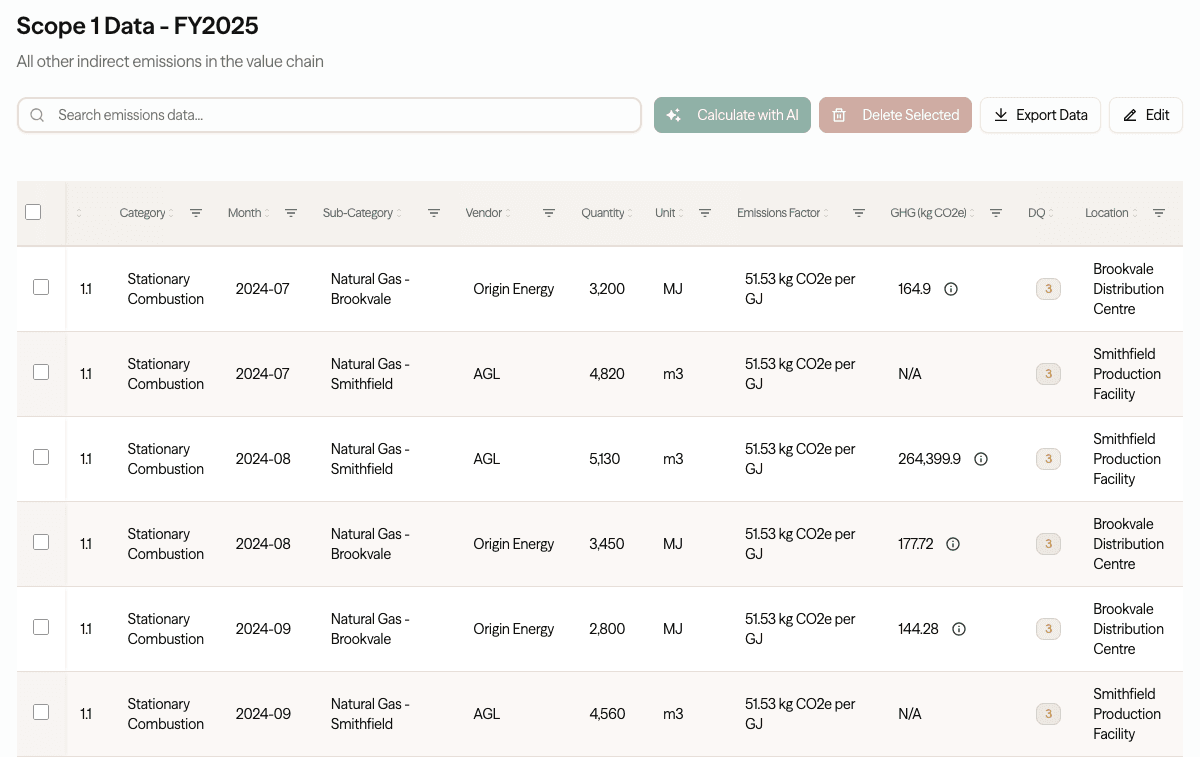
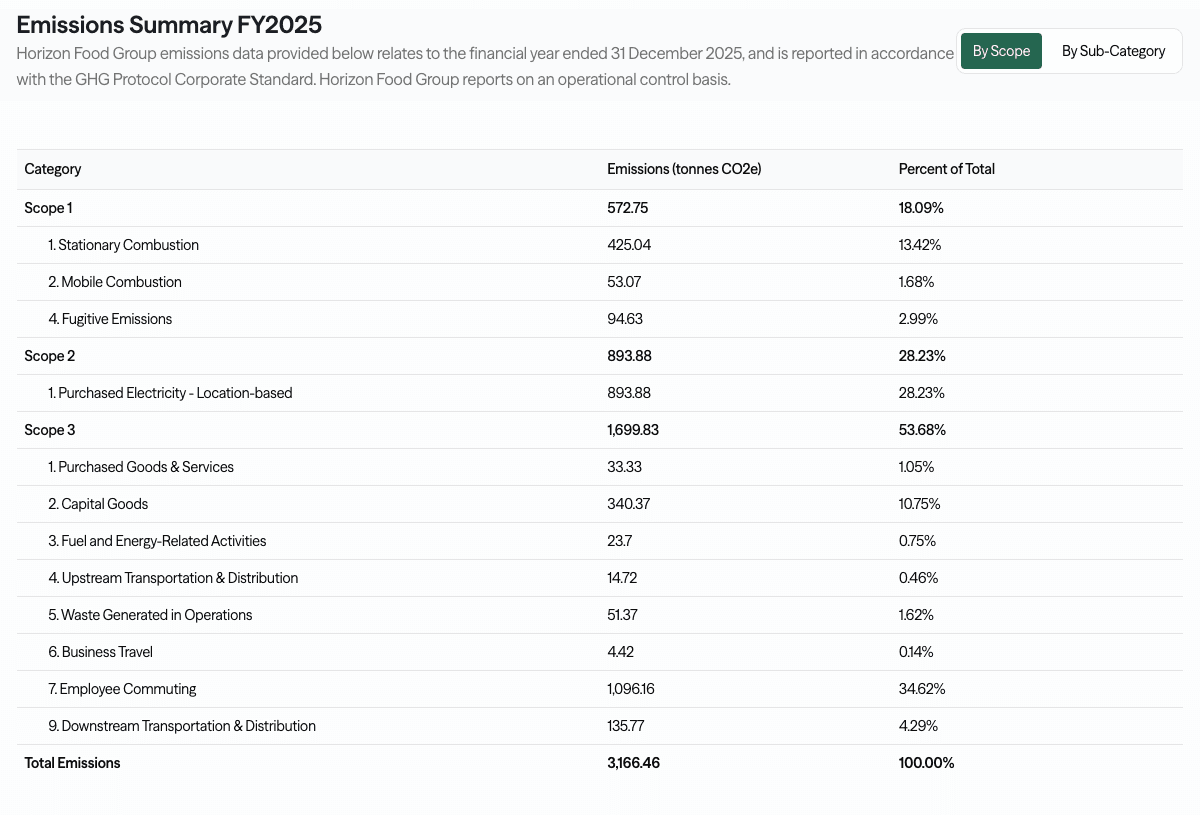
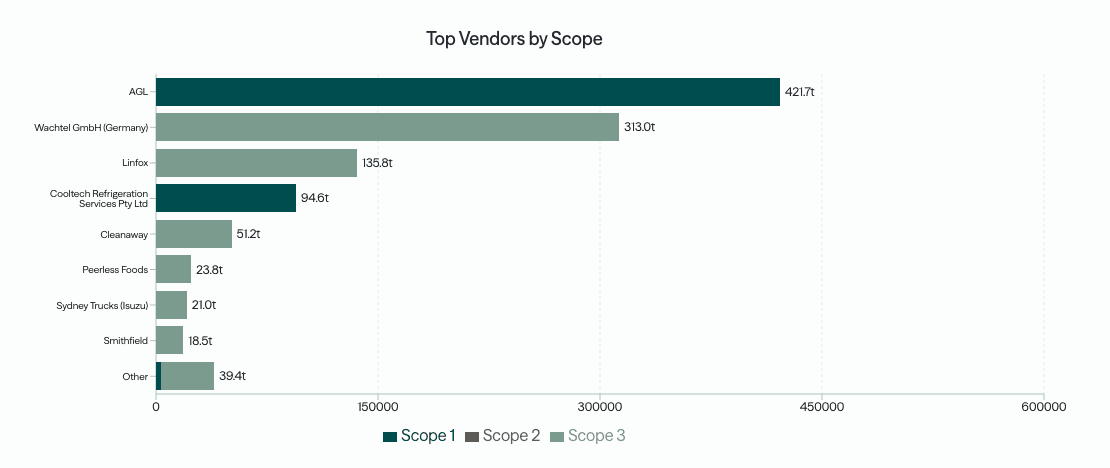 Every number traced to source
See a finished inventory, every number traced to its source
A completed, ASRS-ready example. Every figure linked back to its source document, emissions factor, and reasoning.
Tell us about your team and we'll walk you through this example.
How it works
Drop in utility invoices, food and beverage procurement and waste records, the analyst calculates each scope with matched factors, and you report per venue, per brand or consolidated across the group.
See the full process →Scope 1 & 2 · Sites
Kitchen and room energy
Gas cooktops and hot water, and electricity for rooms, climate and lifts, are the metered core. CO2 Lab reads gas and electricity per site, applies the current NGA factors, and reports location-based and market-based electricity side by side.
Natural gas and LPG as Scope 1
Grid electricity by state NGA factor
Location-based and market-based reported
Refrigerant top-ups as fugitive Scope 1
Food and beverage procurement spend
Spend-based estimate to start, labelled
Supplier-specific factors where available
Reconciled so nothing is counted twice
Scope 3 · Category 1
Food and beverage
What you buy to serve is often the largest part of the footprint, and beef and dairy carry far more than their share. CO2 Lab starts from procurement spend with spend-based factors, swaps in supplier data as it arrives, and labels every line so you can see what is estimated.
Scope 3 · Category 5
Waste to landfill
Food waste that goes to landfill breaks down into methane. CO2 Lab takes your waste collection volumes, applies the NGER landfill method, converts methane at a global warming potential of 28, and labels the line as modelled, so a real but estimated source is disclosed honestly.
Waste volumes from collection records
NGER landfill gas method for organics
Methane GWP 28 (NGER, AR5 basis)
Diversion and composting credited separately
Frequently asked questions
One footprint across every venue you run
A free 30-minute chat, no obligation, on where you stand ahead of your first ASRS report.
Book a Sustainability Check-upWhere to go next
Food & beverage
Ingredients and processing at the source, the factor per line.
IndustryRetail
Multi-site energy and purchased goods, the factor per line.
MethodologySupplier engagement
Replace spend estimates with real supplier data.
ComplianceASRS by group
Your reporting group, start date and disclosure requirements.