The diesel is your footprint, and your client wants it line by line
The diesel your plant burns on a client's site is now the client's problem too, because a miner has to report it inside their Scope 3. Answering that credibly takes more than a single company total: it takes the emissions allocated to each contract. The analyst builds that from your bulk-fuel and plant-hour records.
You stay the reviewer
Bulk-fuel data in, a defensible per-contract number out
The record of it is in bulk-fuel issues, plant hour meters and genset logs spread across remote sites. The analyst reconciles the litres to each contract, matches the right factor, and produces a per-contract number that stands up when your client's assurer comes to check it.
Emissions line
Diesel, site haul trucks and excavators, month
Result
112.6 t CO₂e
How the analyst got there
Source
Bulk-fuel issue, 42,000 L diesel
Emission factor
NGA 2025, diesel: 2.68 kg CO₂e/L (Scope 1 combustion)
Reasoning
Own plant combustion → Scope 1. Activity-based: metered litres. Well-to-wheel adds upstream fuel.
Bringing experience with SME to Enterprise








99.95%
Calculation accuracy
Per-contract
Emissions tracking
30 min
Average processing time
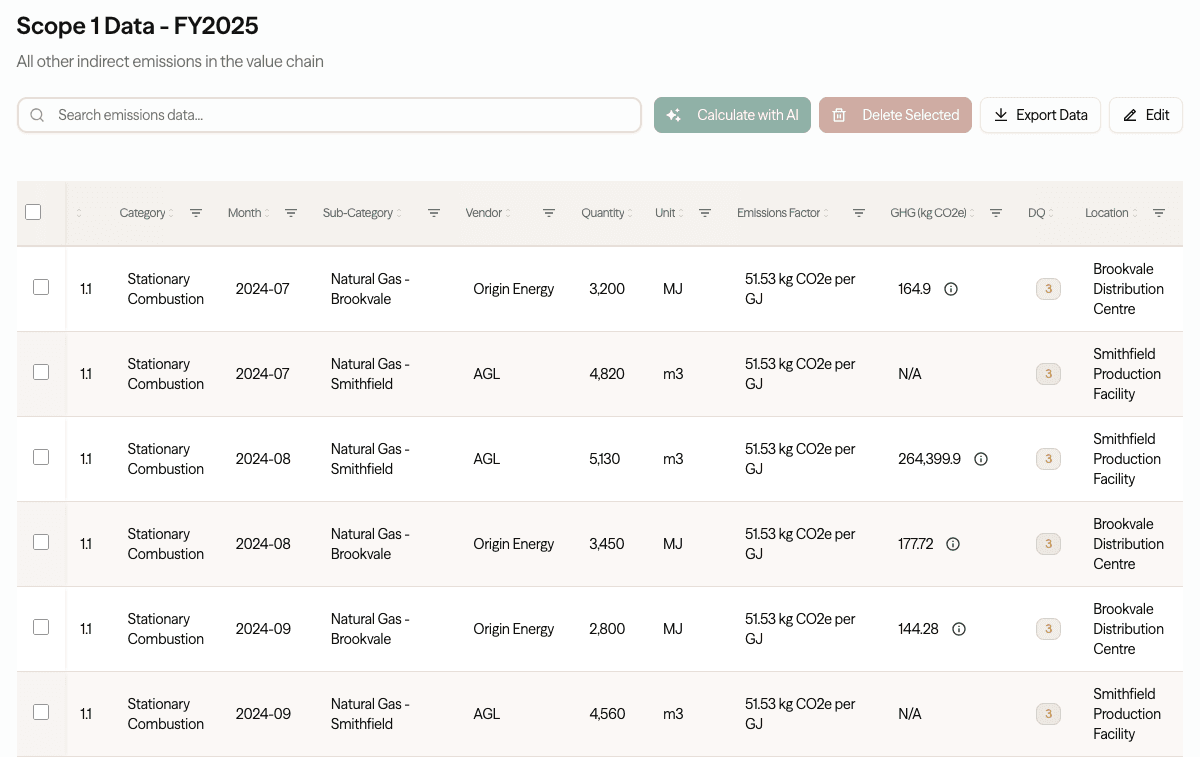
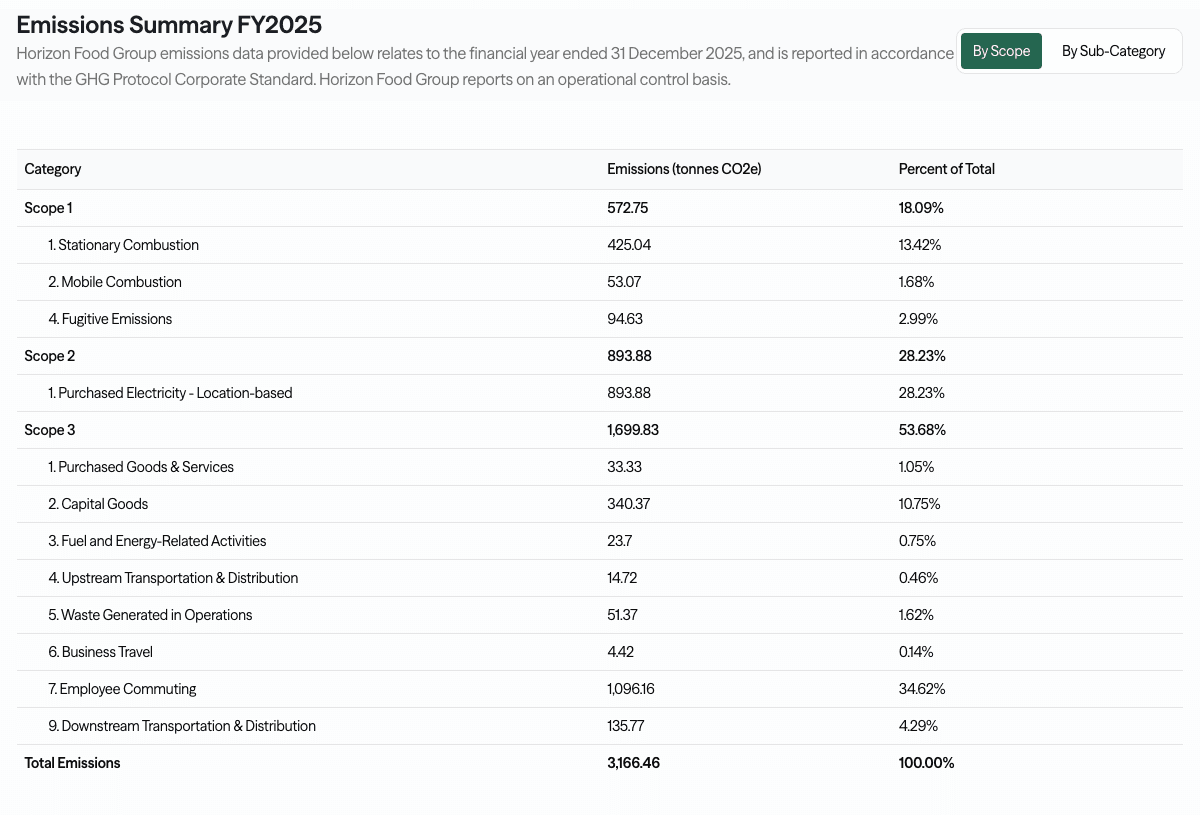
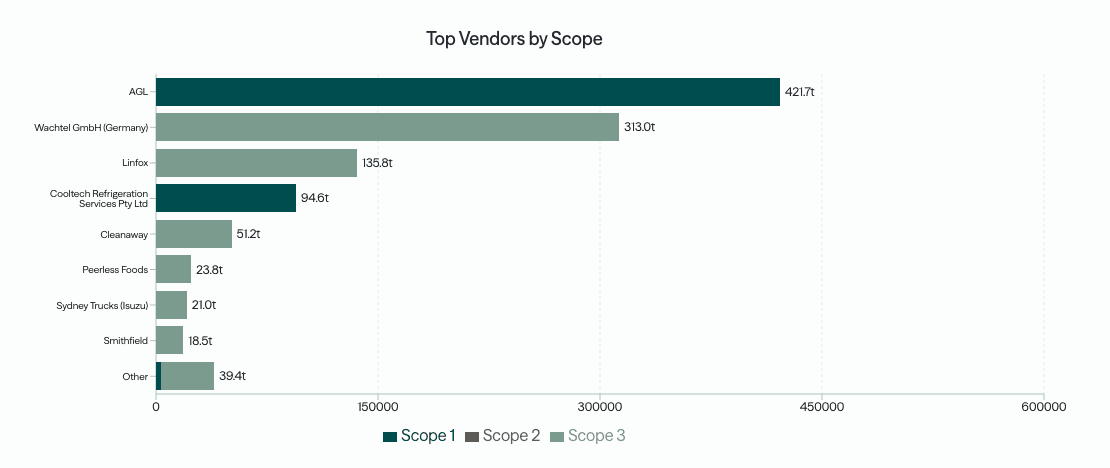 Every number traced to source
See a finished inventory, every number traced to its source
A completed, ASRS-ready example. Every figure linked back to its source document, emissions factor, and reasoning.
Tell us about your team and we'll walk you through this example.
How it works
Drop in bulk-fuel records, plant hours and genset logs, the analyst calculates each scope with matched factors, and you report per contract, per site or consolidated across the business, in the format your client needs.
See the full process →Scope 1 · Plant & fleet
Diesel plant
Haul trucks, excavators, dozers and light vehicles are where the fuel goes. CO2 Lab reads bulk-fuel issue records and plant hour meters per unit, applies the current NGA diesel factor, and reports on a well-to-wheel basis rather than tailpipe only.
Litres per unit from bulk-fuel issues
Plant hours cross-checked against burn rate
Well-to-wheel, not tailpipe only
Diesel, biodiesel blends and renewable diesel (HVO)
Fuel and plant allocated per contract
Your Scope 1 becomes their Scope 3
Reported in the client requested format
Source and factor shown, ready for assurance
For your client
Per-contract allocation
The fuel you burn on a client's site is their Scope 3, so a single total is not enough. CO2 Lab allocates fuel and plant to each contract, so you can hand each client their slice with the working attached, and be the contractor who makes their reporting easier rather than harder.
Scope 1 & 2 · Sites
Camp and site power
Remote camps and workshops run on diesel gensets as often as grid power. CO2 Lab treats genset diesel as Scope 1 and grid power as Scope 2 on the right state factor, so off-grid sites are counted correctly rather than lumped in with the plant fleet.
Diesel gensets as Scope 1 combustion
Grid electricity by state NGA factor
Camp, workshop and office loads
Primary and default data clearly labelled
Frequently asked questions
Give each client the number they need
A free 30-minute chat, no obligation, on where you stand ahead of your first ASRS report.
Book a Sustainability Check-upWhere to go next
Logistics
Fleet fuel and subcontracted freight, the factor shown per line.
MethodologySupplier engagement
Hand your client real data instead of a spend estimate.
MethodologySpend vs activity-based
Which method to use where, and why it changes your Scope 3.
ComplianceASRS by group
Your reporting group, start date and disclosure requirements.